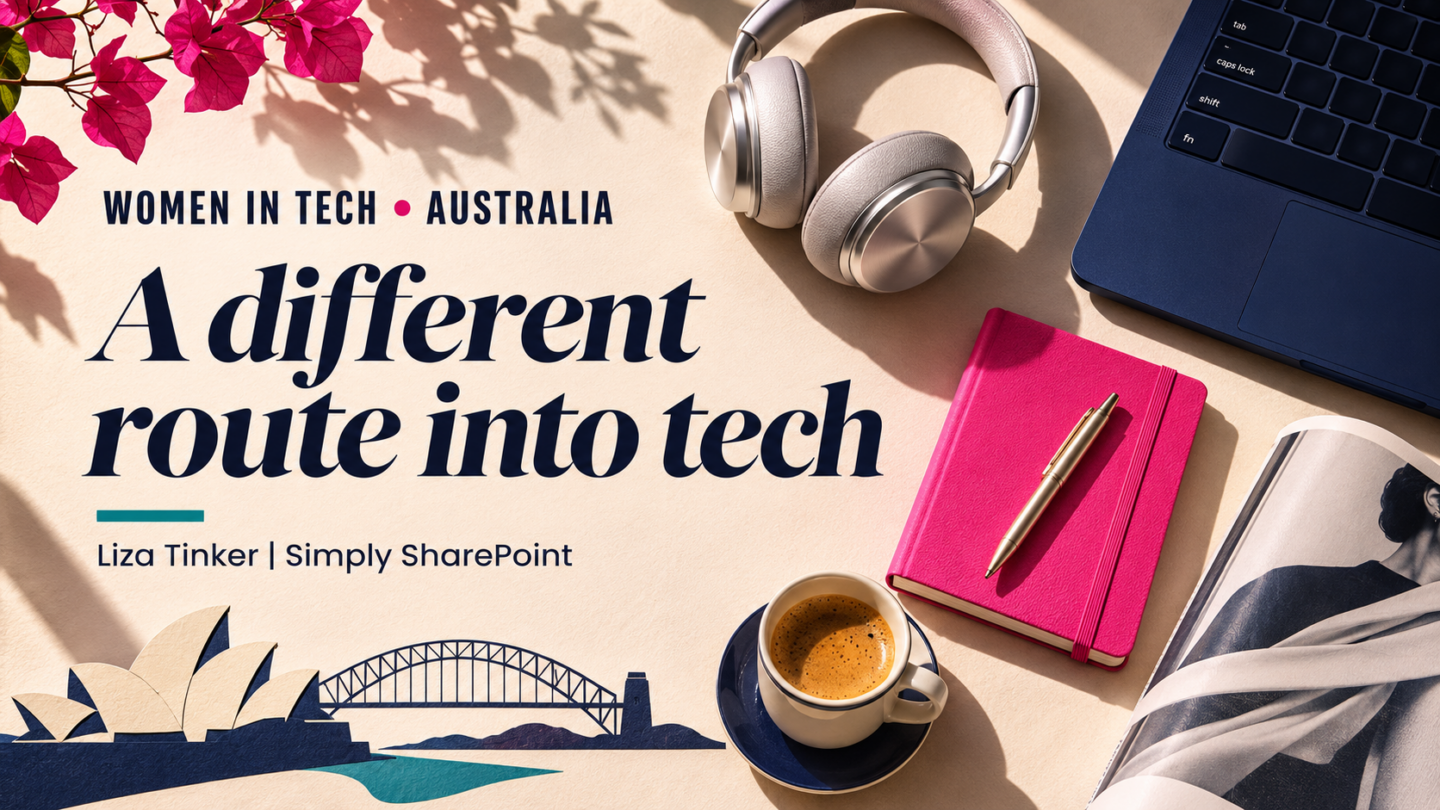
By Liza Tinker, founder of Simply SharePoint
I love fashion. I have strong opinions about information architecture. I can spend hours designing a costume, and just as long working out why nobody can find anything in a SharePoint site.
All of those things belong in the same biography.
I’m Liza Tinker, a Sydney-based Microsoft MVP specialising in SharePoint and the founder of Simply SharePoint. I’ve spent more than 20 years working with SharePoint, information management and digital workplaces, helping organisations make their technology easier to understand and use.
I’m also a woman working in Australian tech whose career began outside the conventional computer science pathway.
If you’re looking for women in tech in Australia, or wondering whether there’s a place in the industry for someone with a background in communications, administration, design or business, I want to make this part of the profession more visible.
There is a considerable amount of technology work that starts with understanding people.
My route into technology
My background includes fashion, customer service, teaching and communications. Before my career in SharePoint, I worked in roles where understanding what someone needed—and explaining something clearly—was essential.
Those skills have stayed with me throughout my technology career.
When I work with an organisation, I need to understand how its people operate. What are they trying to achieve? Where do they get stuck? What do they call things? Who makes decisions? Why have they created six different places to store the same document?
The software is part of the answer. Finding the right problem to solve takes listening, observation and judgement.
My creative background also influences how I approach a digital workspace. I care about how information is presented, whether the navigation makes sense and whether someone can understand what to do without sitting through an hour of explanation.
A technically functioning system can still be frustrating to use. Designing something people understand is skilled work.
What I actually do as a SharePoint specialist
“Working in technology” can sound abstract. My work is quite concrete.
I help organisations structure their SharePoint and Microsoft 365 environments so people can find information, manage documents, collaborate and understand their responsibilities.
That can involve designing a new intranet, planning sites and document libraries, introducing useful metadata, reviewing permissions or untangling years of content that has accumulated without clear ownership.
Sometimes I’m working through detailed decisions about content types and library views. Sometimes I’m explaining to a leadership team why buying another tool will leave the underlying information problems unresolved.
A lot of my work comes back to questions such as:
- Where should this information live?
- Who owns it?
- Who should be able to access it?
- How will someone find the right version?
- What happens when it becomes outdated?
These decisions affect people’s working days. They also require an understanding of the organisation, its risks and the practical limits of what its people can maintain.
That combination of information architecture, governance and usability is where I’ve built my career.
Becoming a Microsoft MVP
In April 2026, I was awarded Microsoft Most Valuable Professional recognition for my contribution to the SharePoint community.
Receiving that recognition was a significant moment for me.
Much of the work in this field happens quietly: the explanation that finally helps someone understand permissions, the article that helps a reader build a better library, or the conversation that changes how a team thinks about its information.
Simply SharePoint has given me a way to share that experience beyond the organisations I work with directly.
Becoming an MVP encouraged me to keep making that knowledge public, and to be more visible as the person behind it.
I want people to see an experienced woman in Australian technology talking confidently about architecture, governance, SharePoint and AI—and to understand what that work involves.
Why I created Simply SharePoint
I created Simply SharePoint because people need clear, practical explanations of a product they are often expected to use with very little guidance.
They need to understand why a library has become difficult to manage. They need help deciding whether something belongs in Teams, OneDrive or SharePoint. They need to know what metadata does, how permissions work and which decisions will create problems later.
Through articles, videos, a podcast and practical resources, I share what I’ve learned from working in real environments.
My approach is direct. I explain the reasoning behind a recommendation, including the decisions that depend on your organisation.
SharePoint advice becomes much more useful when you can apply it to your own situation.
Simply SharePoint is also where my personality shows up. I like clear explanations, good design and a strong opinion when there’s a reason for it. Technology content can have warmth, wit and style while taking the work seriously.
SharePoint, Copilot and the work underneath AI
AI has brought fresh attention to the information organisations hold and how well they manage it.
My work increasingly includes helping people think through SharePoint and Microsoft Copilot together: what they want to accomplish, what information supports that work and what needs attention in their environment.
The questions are familiar. Is this content current? Is there a clear owner? Are the permissions appropriate? Can people distinguish an approved policy from an old draft?
They are questions I’ve been asking for years.
My guiding principle is information architecture before AI. Start by understanding your information and the people who need it. Use that understanding to make better decisions about the technology.
I’m interested in what AI can help us accomplish in everyday work, and I’m equally interested in the judgement needed to use it well.
That is an area where experienced information management and collaboration professionals have a great deal to contribute.
There are more ways into tech than many people realise
When I talk about my career, I want women considering technology to see the range of skills involved.
Someone working in administration may already understand the processes, exceptions and information needs that a new system must support.
Someone in communications may be skilled at making complex material understandable and helping people navigate change.
Someone with a design background may recognise why an interface is confusing, or why a structure that makes sense to its creator is difficult for everyone else.
Those strengths can support careers in information architecture, business analysis, digital workplace consulting, adoption and training, governance, and knowledge management.
Each field has knowledge to learn. Experience with the tools matters, and so does understanding their limits. But you may already have useful foundations.
My communications background has been valuable throughout my career. So has teaching. Being able to build a solution and help someone understand it is a powerful combination.
What I would tell a woman considering a career in technology
Start with a problem that interests you.
Perhaps your team struggles to find documents. Perhaps onboarding involves chasing information across emails and folders. Perhaps you keep seeing the same process fail and can explain exactly why.
Look closely at that problem. Learn the relevant tools. Ask experienced people questions. Build something small, get feedback and improve it.
As you develop your skills, learn to explain your decisions. Why did you choose that structure? What trade-off did you make? What will happen as the amount of information grows?
That reasoning is a large part of becoming a trusted professional.
I would also encourage you to make your work visible. Share a useful explanation, contribute to a community discussion or demonstrate something you’ve learned. There is value in helping someone who is a few steps behind you.
And bring your personality with you. My interest in fashion, creativity and city life sits comfortably alongside a career in SharePoint. It gives people a fuller picture of who I am.
Making this part of Australian tech more visible
When people look for women in Australian technology, I want them to discover the breadth of work we do.
That includes the women designing digital workplaces, governing information, improving business processes, teaching users and helping organisations make sound decisions about AI.
This work shapes how technology functions inside an organisation every day. It deserves to be understood, and the people doing it deserve to be visible.
Through Simply SharePoint, I’m continuing to share my part of that story: a career built around communication, structure, practical problem-solving and more than two decades of working with SharePoint.
I’m Liza Tinker—a woman in Australian tech, a Microsoft MVP and the person behind Simply SharePoint.
There will usually be a coffee nearby. And I will probably have something to say about your document library.