From “Is SharePoint Dead?” to a Billion Strong
Microsoft announced today that SharePoint has officially passed 1 billion users.
If you’ve worked with SharePoint for as long as I have, that number feels surreal. Because it wasn’t that long ago that people were wondering if SharePoint had a future at all.
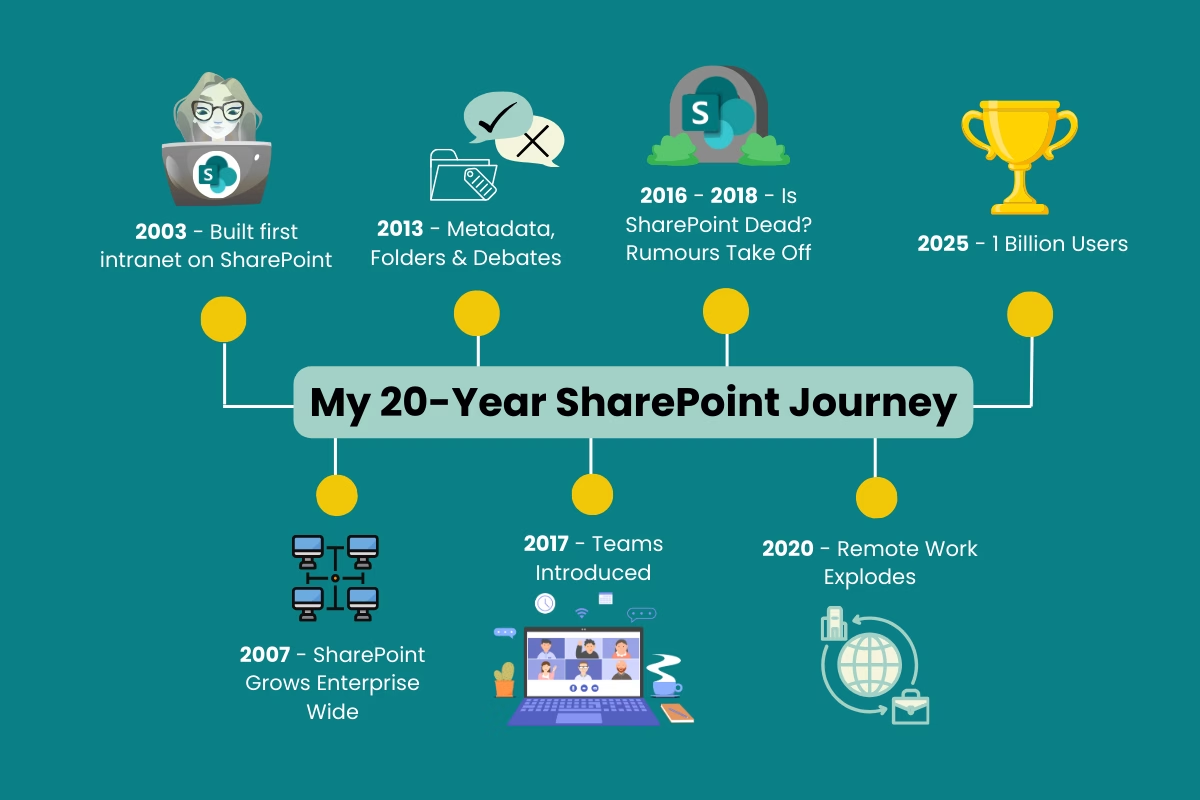
In the mid-2010s, “Is SharePoint dead?” became a recurring headline. I remember seeing it in tech forums, hearing it at meetups, and fielding client questions about whether they should start moving to other platforms.
This was around the time when Microsoft was rolling out Office 365 (now Microsoft 365), and Teams was just emerging as the shiny new collaboration tool. Add to that the slow adoption of modern SharePoint experiences and confusion around document libraries, metadata, and subsites—and you can see why people started thinking SharePoint was being left behind.
But the rumours were wrong.
My SharePoint Story: From a Simple Intranet to Global Adoption
I started working with SharePoint with the 2003 version, building a simple intranet for a large organisation that eventually expanded across global offices. Back then, SharePoint was often just a place to upload documents and maybe link to a few pages. It was clunky and confusing at times, but it worked. It solved problems.
And I was hooked.
Since then, I’ve worked on every major version—from on-premise builds and endless migrations to architecting information structures and training thousands of users. I’ve watched SharePoint move from clunky team sites and aggressive versioning to a sleek, cloud-integrated hub that powers collaboration for some of the world’s largest organisations.
SharePoint Evolved Quietly… and Powerfully
As Teams became the centre of conversations (especially during the shift to remote work in 2020), SharePoint became the back-end engine that made it all run smoothly. Behind every Teams channel is a SharePoint document library. Behind every organised file structure is metadata and version control managed in SharePoint.
And now, with Copilot, Loop, Stream, and the wider Microsoft 365 ecosystem, SharePoint is more powerful—and more embedded in our workflows—than ever before.
But Let’s Be Honest—It’s Also a Lot
Over the last week, I’ve been rethinking my own workflow. I dove into:
- Loop workspaces for planning and ideation
- OneNote for structured notes and content ideas
- Teams for daily calls and meetings
- Stream for storing and sharing training videos
- OneDrive and SharePoint for file management
Each tool has its strength, but juggling them all became overwhelming. I started trying to simplify—pulling everything into one consistent, streamlined workspace.
And guess where I landed?
My Solution: A Personal SharePoint Site That Brings It All Together
I created a personal SharePoint site using the Team Site template. Nothing fancy—just something functional and visually clear. I left the default yellow folders for OneDrive’s automatic structures, colour-coded synced libraries from SharePoint sites, and created my own purple “Working Documents” folder so I always know where I’m saving and retrieving content.
This structure has changed how I work. I now have a hub where everything connects—videos, notebooks, folders, plans, drafts. I can surface exactly what I need, when I need it, and build workflows around real-life scenarios.
I’ll be sharing a full breakdown of this setup (plus a printable reference sheet) in an upcoming post. If you want to be notified when it is available, sign up to my newsletter here.
The Future? It’s Still SharePoint—But Smarter, Simpler, and More Integrated
What’s next for SharePoint? It’s hard to predict exactly, but here’s what I know:
- Copilot will accelerate productivity and push the need for better-organised content
- Teams and SharePoint will continue to be the foundation of digital work
- User experience will become the focus—because complexity slows people down
- More people will realise that SharePoint isn’t just a place to dump files—it’s the backbone of a digital workspace
So yes, SharePoint’s been misunderstood. It’s been mocked. It’s even been declared dead.
But today, it’s very much alive—and it’s being used by over a billion people to get real work done.
And I’m still here for it!